Budapest travel guide, in your ear
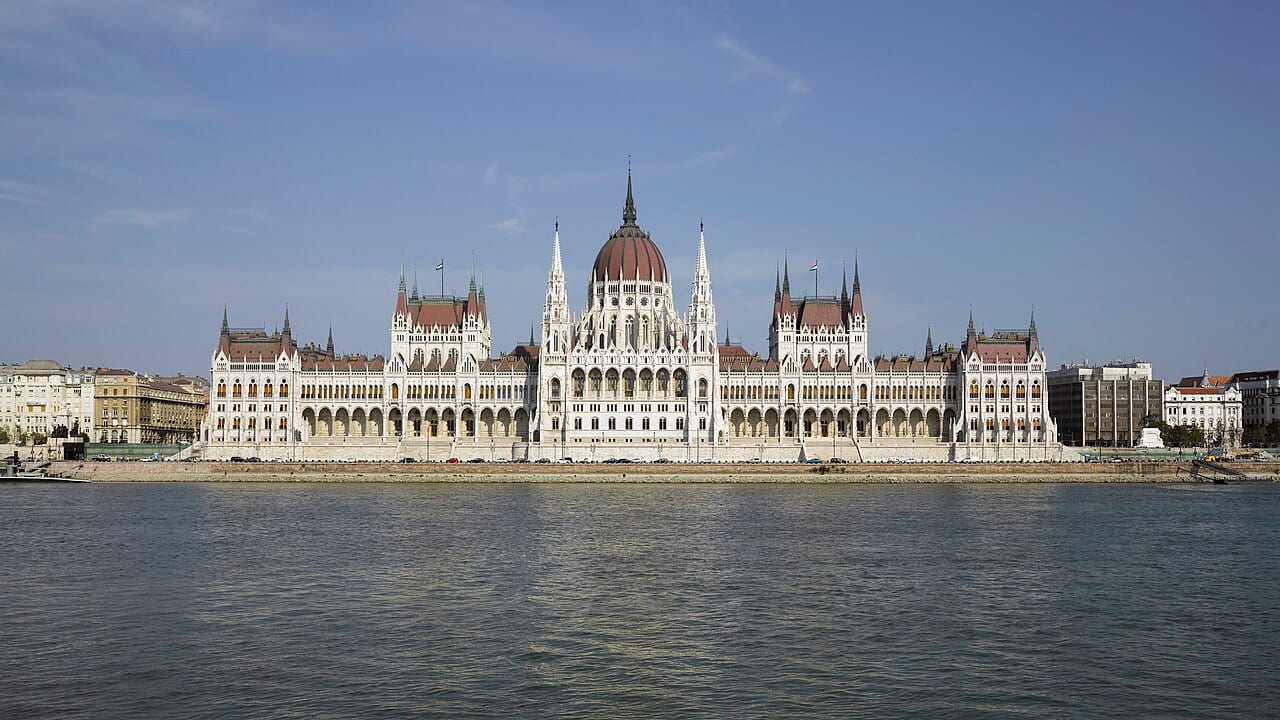
Hungary's grand capital on the Danube, where hilltop Buda's castle and Fisherman's Bastion face Pest's riverfront Parliament, a city of thermal baths, grand boulevards, and lantern-lit ruin bars.
- 31 narrated stops
- ~2 hours of stories
- 6 languages
- Offline ready
_2015-01.jpg)
What is the Gingerguide Budapest tour?
Budapest has 31 narrated sights on Gingerguide's self-guided audio walking tour. Plan about two to three days to walk them all. The app is free to download, every city has a free preview, and the tour works offline in six languages.
It is a self-guided audio walking tour of Budapest, Hungary, inside the Gingerguide travel guide app. The tour maps 31 sights and tells the story of each one in a two to three minute narration with a lifelike AI voice. When the story is not enough, ask the built-in AI guide about the place and keep the conversation going. Everything is available in six languages and works fully offline after a one-time download.
Which audio guide app is best for Budapest?
It depends on the trip. For Budapest, Gingerguide gives you all 31 sights on one offline map, narrated in six languages, with an AI guide to ask. Other apps are better for a single human-narrated walk, for museum guides, or for driving. We compared the main options honestly, with sources.
About Budapest
Stand on any bridge here at dusk and the city arranges itself into two halves. On your left, Buda climbs into wooded hills, crowned by a royal castle and a fairy-tale bastion of white turrets. On your right, Pest spreads out flat and grand, all wide boulevards and domes and a parliament that looks lifted from a dream. Between them slides the Danube, broad and grey-green, and every few hundred metres another bridge stitches the two sides back together.
For most of their history these were separate towns: hilly Buda, ancient Óbuda, and busy Pest across the water. They became a single city, Budapest, only in 1873, and what followed was a golden age. As a co-capital of the Austro-Hungarian Empire, the city built furiously toward 1896, the thousandth anniversary of the Magyars' arrival. Heroes' Square, the little yellow metro under Andrássy Avenue, the castles and the grand cafés: much of what you will admire went up in that single confident burst.
Budapest is also a city floating on hot water. More than a hundred thermal springs rise beneath its streets, and bathing here is no spa-day novelty but a centuries-old habit, from Ottoman domes pricked with points of coloured light to vast palaces of pools where old men play chess in the steam while snow settles on their shoulders.
The twentieth century was not gentle with all this beauty. A siege gutted the castle, an iron row of shoes on the embankment marks where people were shot into the river, and a black-framed house on Andrássy remembers two tyrannies in a row. In 1956 the city rose against its rulers and was crushed, then rose again, more quietly, in the grey decades that followed.
Today the old grandeur wears its scars lightly. Courtyards once left as rubble have become lantern-lit bars, market halls overflow with paprika and pastry, and one by one the river lights come on. Cross a bridge, pick a bank, and let Budapest show you both of its faces at once.
One day in Budapest
A simple way to walk the highlights, following the route order in the app. Swap anything; Budapest rewards detours.
Afternoon and evening
Have more than a day? Budapest in 2 days →Budapest in 3 days →
What to see in Budapest: all 31 stops
Every place below has its own narrated story in the app, and its own answers when you want more. Walk them in any order; the map shows what is around you.
-
Hungarian Parliament Building
A forest of neo-Gothic spires rising straight out of the Danube, Hungary's vast riverfront parliament was built to be seen from the water, and it still stops you cold.
-
Shoes on the Danube Bank
Sixty pairs of iron shoes line the Danube embankment where Arrow Cross militiamen shot their victims into the river in 1944 and 1945, ordering them to remove their shoes first.
-
Széchenyi Chain Bridge
The first permanent bridge ever thrown across the Danube, guarded by four stone lions, and no, the sculptor did not drown himself over their supposedly missing tongues.
-
St Stephen's Basilica
Behind the altar of Budapest's grandest church rests the mummified right hand of King Stephen, a thousand-year-old relic of the man who founded Hungary, lit up when you drop in a coin.
-
Hungarian State Opera House (Magyar Állami Operaház)
Two bronze composers flank the door and a painted Olympus fills the ceiling: Miklós Ybl's 1884 opera house is the jewel of Andrássy Avenue, reopened after years dark.
-
House of Terror
At Andrássy 60, a black blade casts the word TERROR across the facade of a building where both the Arrow Cross and the communist secret police tortured and killed.
-
Andrássy Avenue (Andrássy út)
A mile-and-a-half line of grand mansions runs from downtown to Heroes' Square, and under your feet rattles the oldest electric underground on the European continent.
-
Heroes' Square (Hősök tere)
A vast ceremonial plaza where an archangel balances the Hungarian crown atop a thirty-six-metre column, seven mounted chieftains ride below, and the famous stone at your feet hides a surprise.
-
City Park (Városliget)
Budapest's sprawling green heart, one of the world's earliest public parks, hiding a fairy-tale castle, a steaming thermal bath, a zoo, and a boating lake that freezes into a skating rink.
-
Vajdahunyad Castle (Vajdahunyad vára)
A storybook castle on a park island that looks seven centuries old but was raised for an 1896 fair, first in cardboard, then rebuilt in stone to keep.
-
Széchenyi Thermal Bath (Széchenyi gyógyfürdő)
A butter-yellow Neo-Baroque palace of steaming pools, opened in 1913 and fed by a hot spring, famous for the bathers who play chess in the open water while it snows.
-
Dohány Street Synagogue
Europe's largest synagogue holds a courtyard where a silver willow weeps names and a Holocaust ghetto's dead lie buried, Moorish splendour and mourning under the same twin towers.
-
Jewish Quarter (Erzsébetváros)
Budapest's historic Jewish quarter carries two histories at once: the sealed 1944 ghetto and, inside the same crumbling courtyards, the ruin bars that made District Seven the city's nightlife.
-
New York Café (New York Kávéház)
Marble columns, gilded ceilings and frescoes wrap a room where Budapest's writers once nursed their coffee all day, a café so ornate its own menu calls it the world's loveliest.
-
Hungarian National Museum
Hungary's grand temple to its own past, and the staircase where legend says a poet lit the 1848 revolution. Just don't come expecting the Holy Crown; that's in Parliament.
-
Váci Street (Váci utca)
No cars, just footsteps and shop windows: Pest's great walking street runs from an old café square all the way to the smell of paprika at the market hall.
-
Great Market Hall / Central Market Hall (Nagyvásárcsarnok)
Ropes of scarlet paprika hang under a cathedral-sized roof of iron and Zsolnay tiles: Budapest's grandest market has fed the city since 1897, where Váci utca meets the river.
-
Liberty Bridge
The shortest of Budapest's downtown bridges wears apple-green Art Nouveau ironwork and four bronze mythical turul birds, and on summer weekends the city hands it over to pedestrians.
-
Gellért Thermal Baths
A dazzling Art Nouveau thermal palace of 1918 at the foot of Gellért Hill, its columned indoor pool wrapped in Zsolnay tiles, stained glass and mosaics.
-
Cave Church
A church built inside a natural cave in Gellért Hill, home to Hungary's own Pauline order, raided and sealed shut under communism, and reopened only after 1989.
-
Gellért Hill
A steep dolomite hill rising 235 metres over the Danube, crowned by a fortress and a soaring statue, offering what many call the finest panorama in all of Budapest.
-
Citadella
A long, low Habsburg fortress crowning Gellért Hill, raised in the 1850s to keep watch over a rebellious city, never a medieval castle, despite its ancient-looking walls.
-
Liberty Statue
A 14-metre bronze woman lifting a palm frond over Budapest from the Citadella's bastion, raised in 1947 as a Soviet memorial, later rededicated to Hungary's freedom.
-
Rudas Baths
A working Ottoman Turkish bath from the sixteenth century, where coloured light falls through a stone dome onto an octagonal pool fed by hot springs beneath Gellért Hill.
-
Buda Castle Funicular (Budavári Sikló)
A tiny Victorian railway of stepped wooden carriages that hauls you up Castle Hill from the Chain Bridge in ninety seconds, running, on and off, since 1870.
-
Buda Castle (Budavári Palota)
One of Europe's most rebuilt palaces, this vast royal complex crowning Castle Hill has been besieged, burned, and raised again and again, and now guards Hungary's greatest art.
-
Castle District (Várnegyed)
A hushed, cobbled quarter of pastel townhouses and hidden Gothic doorways crowning Castle Hill, a walled medieval town that has kept its shape for seven centuries above the Danube.
-
Matthias Church (Mátyás-templom)
Beneath a dazzling roof of coloured Zsolnay tiles stands a Gothic church where Habsburg emperors were crowned Kings of Hungary, and where King Matthias married twice.
-
Fisherman's Bastion (Halászbástya)
A fairy-tale terrace of white turrets and arcades that never defended anything, built purely so visitors could drink in the finest panorama over the Danube and Pest.
-
Hospital in the Rock
Beneath Buda Castle Hill, a secret hospital in the caves treated the wounded through the 1944 siege and the 1956 revolution, then became a hidden Cold War nuclear bunker.
-
Margaret Island (Margit-sziget)
A car-free green island moored in the Danube, where medieval convent ruins, an Art Nouveau water tower, a musical fountain, and shaded lawns give the whole city somewhere to breathe.
Three things most visitors miss
Hungarian Parliament Building
The central dome stands 96 metres tall, the exact height of St Stephen's Basilica across the city. The two were matched on purpose, so that church and state would meet as equals on the skyline.
Széchenyi Chain Bridge
A beloved local legend says the lions have no tongues and that the humiliated sculptor drowned himself. Both halves are false: the lions do have tongues, merely hidden from view at street level.
St Stephen's Basilica
The mummified right hand of King Stephen I, kept in a reliquary here, is close to a thousand years old. Each 20 August it is paraded through Budapest in a national holiday procession.
Budapest tour: questions and answers
How many days do you need in Budapest?
To see Gingerguide's 31 narrated highlights of Budapest on foot, plan about two to three days. The tour is self-guided, so you set the pace: cover the whole route in a day or spread it across a trip. Each sight has a two to three minute story, roughly 2 hours of audio in total.
What are the top things to see in Budapest?
Gingerguide narrates 31 sights in Budapest, starting with Hungarian Parliament Building, Shoes on the Danube Bank, Széchenyi Chain Bridge, St Stephen's Basilica. Each one has its own audio story on a live map, and you can ask the built-in AI guide anything the story leaves open.
Do I need a tour guide in Budapest?
Not a human one. Gingerguide covers Budapest with 31 narrated sights, so you get the stories a guide would tell, at your own pace and on your own route. And if a story leaves you with a question, you can ask the built-in AI guide and discuss the place right there, the way you would with a guide.
How many stops does the Budapest audio tour have?
The Budapest guide covers 31 sights. Each one has a researched story of roughly three minutes, about 2 hours of listening in total. You choose the order and the pace; the tour is self-guided.
Does the Budapest tour work offline?
Yes. You can download Budapest in the app, audio, photos, and offline map tiles included. After the download, the full tour works without an internet connection.
Which languages does the Budapest guide support?
Every Budapest narration is available in English, Spanish, French, German, Turkish, and Chinese. You can switch the language in the app at any time.
Is the Budapest audio guide free?
The Gingerguide app is free to download, and Budapest includes a free preview: you can see all 31 sights on the map at no cost. A premium subscription unlocks the full stories, audio narration, and the offline download.
Hear Budapest tell its own story.
Preview all 31 Budapest stops free in the Gingerguide app.
Updated: