Cork travel guide, in your ear
Ireland's second city, built on islands in the River Lee, known for its food scene, English Market, and the nearby Blarney Castle.
- 22 narrated stops
- ~1 hour of stories
- 6 languages
- Offline ready

What is the Gingerguide Cork tour?
Cork has 22 narrated sights on Gingerguide's self-guided audio walking tour. Plan about two days to walk them all. The app is free to download, every city has a free preview, and the tour works offline in six languages.
It is a self-guided audio walking tour of Cork, Ireland, inside the Gingerguide travel guide app. The tour maps 22 sights and tells the story of each one in a two to three minute narration with a lifelike AI voice. When the story is not enough, ask the built-in AI guide about the place and keep the conversation going. Everything is available in six languages and works fully offline after a one-time download.
Which audio guide app is best for Cork?
It depends on the trip. For Cork, Gingerguide gives you all 22 sights on one offline map, narrated in six languages, with an AI guide to ask. Other apps are better for a single human-narrated walk, for museum guides, or for driving. We compared the main options honestly, with sources.
About Cork
Cork is a city that was built on water, and has never quite forgotten it. Ireland's proud second city sits in the deep south, where the River Lee splits in two and wraps its old centre in a little island of quays and bridges. Many of its streets were once channels of the river, later filled in, so that Cork still curves and flows like the water beneath it. It is a warm, quick-witted, famously contrary place that calls itself, only half-joking, the real capital of Ireland.
That cheek is old. Corkonians have a long habit of backing the losing side and the underdog, going all the way back to a medieval pretender they championed against the English crown, which earned the place its enduring nickname: the Rebel City. Down the centuries it stayed stubbornly itself, a merchant town grown rich on butter and beef and shipping, sending its goods out from one of the world's great natural harbours to the far corners of the globe.
Today that independent streak has turned delicious. Cork is Ireland's food capital, and the heart of it is a covered market that has fed the city since the seventeen hundreds, its stalls piled with fish, cheese, and buttery local specialities. Around it spreads a city of good pubs, live music, students, and stout, small enough to walk in an afternoon, and just big enough to have real swagger.
A few things capture it. High over the north side rises the tower of Shandon, topped by a golden salmon, its four clock faces so unreliable that locals christened it the four-faced liar. Across the water, a great three-spired cathedral marks the very spot where a monk founded Cork thirteen centuries ago. And a short way out of town stands a castle with a stone that, kissed, is said to grant the gift of the gab.
End the day in an old pub near the river as a fiddle strikes up and the talk gets going. Someone puts the world to rights, someone else disagrees, and the whole room laughs. Cork will tell you, cheerfully and at length, exactly why it is the best place in Ireland. It may even be right. Either way, by closing time, you will half believe it.
One day in Cork
A simple way to walk the highlights, following the route order in the app. Swap anything; Cork rewards detours.
Midday
Afternoon and evening
Have more than a day? Cork in 2 days →Cork in 3 days →
What to see in Cork: all 22 stops
Every place below has its own narrated story in the app, and its own answers when you want more. Walk them in any order; the map shows what is around you.
-
The English Market
A beloved covered food market in the heart of Cork city, trading since 1788 with artisan produce and local specialities including tripe, drisheen, and spiced beef.
-
Cork City Gaol
A formidable 19th-century Gothic prison turned social history museum, vividly depicting prison life through reconstructed cells and wax figures.
-
St Fin Barre's Cathedral
A breathtaking French Gothic masterpiece completed in 1879, designed by William Burges with soaring spires, a golden angel weathervane, and an exquisite mosaic floor.
-
Shandon Bells & St Anne's Church
Cork's most iconic tower, famous for its two limestone and two sandstone faces, the eight melodious Shandon Bells that visitors can ring themselves, and its celebrated folk song.
-
University College Cork
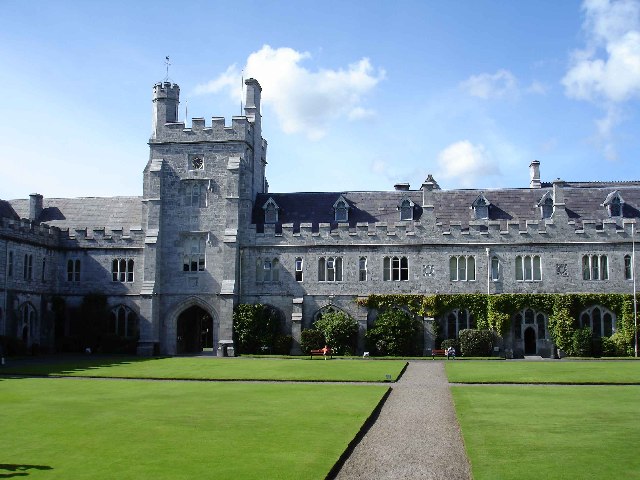
Founded in 1845 as one of three Irish Queen's Colleges, UCC's stunning Tudor Gothic Quadrangle and riverside campus are among the most beautiful in Europe.
-
Fitzgerald Park & Cork Public Museum
Cork's most beloved public park stretches along the River Lee's western edge, sheltering a fine Georgian mansion housing the Cork Public Museum of civic history.
-
Crawford Art Gallery
Cork's leading public art gallery, free to enter, housing Canova plaster casts, Jack B. Yeats paintings, and magnificent Harry Clarke stained glass.
-
Cork Opera House
Cork's premier performing arts venue on Emmet Place, rebuilt in 1965 after a fire destroyed the original Victorian theatre, hosting everything from opera and ballet to comedy and rock concerts.
-
Elizabeth Fort
A well-preserved star-shaped fortification built in 1601 near Cork's south gate, now restored as a heritage site and Garda Síochána museum with panoramic city views.
-
Triskel Arts Centre
An intimate arts venue housed in a converted church on Tobin Street, presenting visual art, film, music, and literary events in the shadow of Cork's oldest streets.
-
Butter Museum
The world's only museum dedicated to butter, telling the extraordinary story of Cork's once-dominant role in the global butter trade through the famous Cork Butter Exchange.
-
Coal Quay & North Main Street
The historic commercial backbone of Cork city, where Coal Quay market has traded for centuries and North Main Street preserves the line of Cork's original Viking-era thoroughfare.
-
Hayfield Manor & Victorian Quarter
Cork's elegant Victorian-era residential quarter around College Road, centred on the grand Hayfield Manor hotel surrounded by fine 19th-century terraced houses and leafy garden suburbs.
-
Cork City Hall
Cork's grand Art Deco civic building opened in 1936, commanding a prominent position on the north channel of the River Lee, replacing the original City Hall burnt during Ireland's War of Independence.
-
Red Abbey Tower
The oldest standing structure in Cork city, a 14th-century tower from the Augustinian friary of SS Peter and Paul, a rare survivor of medieval Cork amid the surrounding modern streets.
-
Nano Nagle Place
A beautifully restored heritage centre honouring Nano Nagle (1718–1784), the Cork philanthropist and educator who founded the Presentation Sisters and secretly educated Cork's poor children.
-
Blarney Castle
A magnificent 15th-century tower house where kissing the legendary Blarney Stone is said to grant the gift of eloquence, surrounded by magical gardens including a famous Poison Garden.
-
Midleton & Jameson Experience
The Old Midleton Distillery houses the Jameson Experience, where you can explore the world's largest pot still and discover how Ireland's most famous whiskey brand was born in East Cork.
-
Cobh & Titanic Experience
The picturesque harbour town of Cobh (pronounced 'Cove') was the Titanic's last port of call in 1912, and its heritage centre tells the poignant stories of the millions who emigrated from Ireland's shores.
-
Kinsale
A beautifully preserved harbour town 25km south of Cork, site of the pivotal Battle of Kinsale in 1601, celebrated as the gourmet capital of Ireland, with Charles Fort guarding its harbour entrance.
-
Old Head of Kinsale
A dramatic clifftop headland jutting into the Atlantic, topped by a lighthouse, and the site where the ocean liner Lusitania was torpedoed and sunk by a German submarine in May 1915.
-
Fota Island Wildlife Park
A pioneering open wildlife park on Fota Island where cheetahs, giraffes, kangaroos, and hundreds of other animals roam in spacious, bar-free enclosures just 15 minutes from Cork city.
Three things most visitors miss
The English Market
Queen Elizabeth II visited the English Market in May 2011, making it a defining moment of the first state visit to Ireland by a British monarch since independence.
Cork City Gaol
After closing as a prison in 1923, the building served as a radio transmission centre for Radio Éireann, Ireland's national broadcaster, until 1957.
St Fin Barre's Cathedral
The golden angel weathervane atop the west tower is said, according to local legend, to signal the end of the world when it finally descends.
Cork tour: questions and answers
How many days do you need in Cork?
To see Gingerguide's 22 narrated highlights of Cork on foot, plan about two days. The tour is self-guided, so you set the pace: cover the whole route in a day or spread it across a trip. Each sight has a two to three minute story, roughly 1 hour of audio in total.
What are the top things to see in Cork?
Gingerguide narrates 22 sights in Cork, starting with The English Market, Cork City Gaol, St Fin Barre's Cathedral, Shandon Bells & St Anne's Church. Each one has its own audio story on a live map, and you can ask the built-in AI guide anything the story leaves open.
Do I need a tour guide in Cork?
Not a human one. Gingerguide covers Cork with 22 narrated sights, so you get the stories a guide would tell, at your own pace and on your own route. And if a story leaves you with a question, you can ask the built-in AI guide and discuss the place right there, the way you would with a guide.
How many stops does the Cork audio tour have?
The Cork guide covers 22 sights. Each one has a researched story of roughly three minutes, about 1 hour of listening in total. You choose the order and the pace; the tour is self-guided.
Does the Cork tour work offline?
Yes. You can download Cork in the app, audio, photos, and offline map tiles included. After the download, the full tour works without an internet connection.
Which languages does the Cork guide support?
Every Cork narration is available in English, Spanish, French, German, Turkish, and Chinese. You can switch the language in the app at any time.
Is the Cork audio guide free?
The Gingerguide app is free to download, and Cork includes a free preview: you can see all 22 sights on the map at no cost. A premium subscription unlocks the full stories, audio narration, and the offline download.
Hear Cork tell its own story.
Preview all 22 Cork stops free in the Gingerguide app.
Updated: